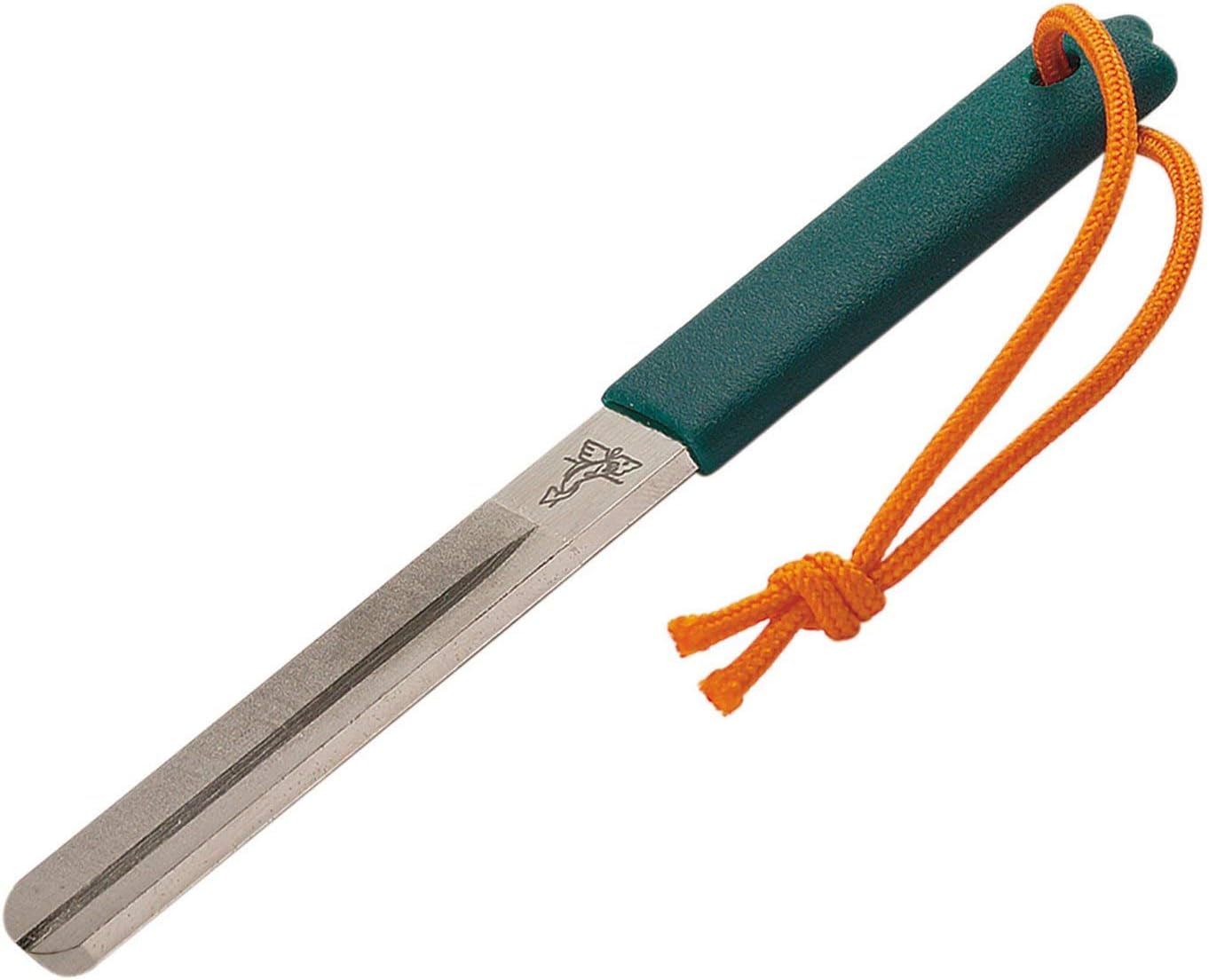
Smith's DCS4 4-Inch Diamond Combination Sharpener
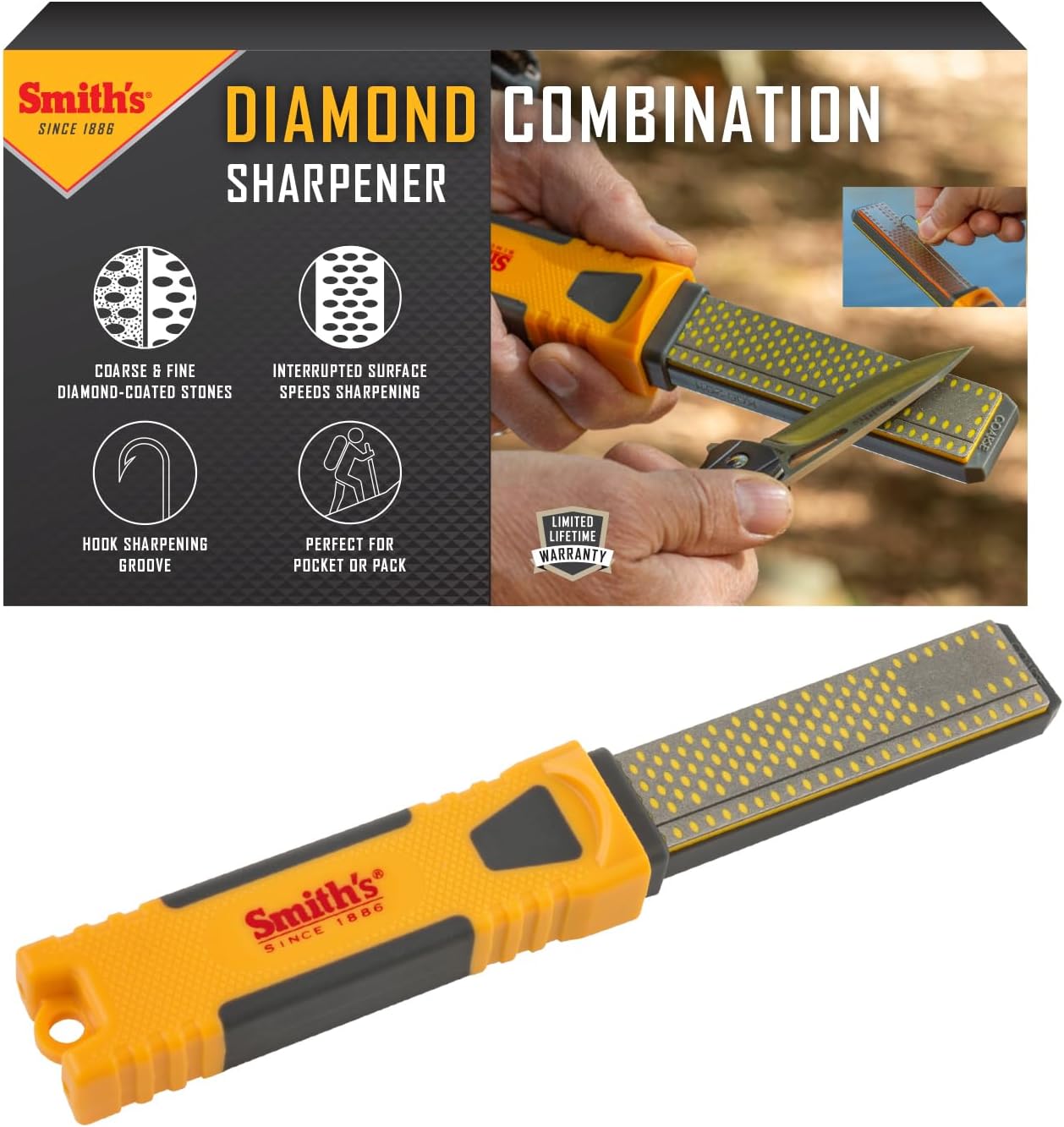
ASIN B00009YV6LSmith's DCS4 4-Inch Diamond Combination Sharpener is the #1 pick here, on 4.6-star Amazon buyer ratings (3,467 of them) and one clear job: hooks and the fillet knife.
Check Price
Seven hook files, diamond stones and combination sharpeners ranked, plus the grit and stroke that actually put a point back on a hook.
A hook goes dull faster than anyone expects. One hookset into a dock piling, one crankbait dragged across gravel, one worm hook that skated off a rock instead of a jaw, and the point is rolled over. It still looks fine. It will still catch fish that eat it hard enough. It will also cost you the ones that just nip.
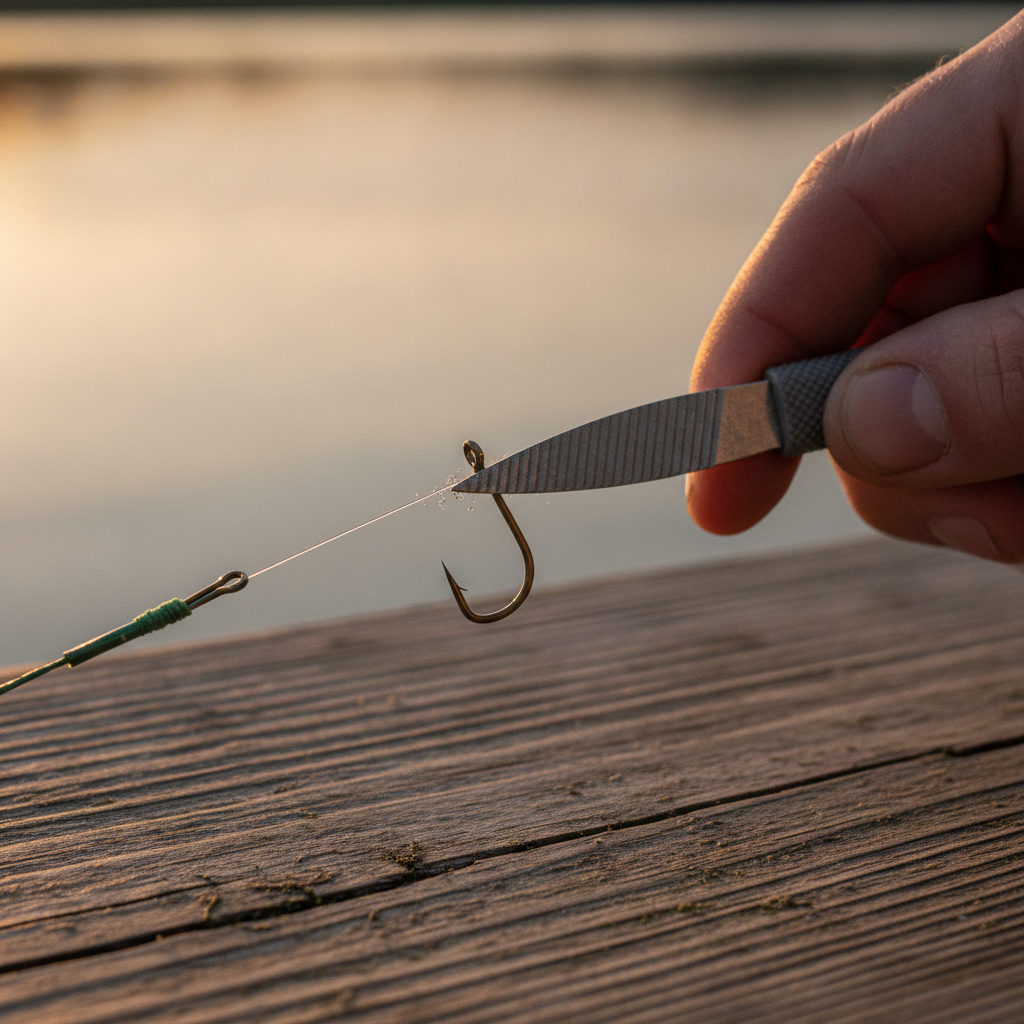
The fix is a few dollars and about fifteen seconds. A hook sharpener is a small file or a diamond-coated stone, and four or five strokes on each of three sides puts a point back that grabs a thumbnail instead of skating across it. It is the least glamorous thing in the tackle bag and one of the few that changes your landing rate without changing anything else you do.
Below are seven ranked on their Amazon buyer ratings and on what each one is actually shaped to sharpen. Grit and groove pattern do most of the deciding, so the buying factors come first, and there is a step-by-step further down if you have never put a file to a hook before.

This is a short list. Most of it is one tool, and the rest is habit rather than purchase.
Roughly 200 to 400 grit. This is the side that reshapes a point that is rolled, bent or blunted flat. Without it you can only maintain hooks that are already nearly sharp.
600 grit or finer. This is the side that turns a reshaped point into one that bites a thumbnail. Skipping it leaves a rough tip that catches on cover and rusts sooner.
The feature that separates a hook sharpener from a plain knife stone. It cradles the point so it cannot slide sideways, which is the only practical way to work on trebles and small hooks.
A clip, a lanyard hole or a retractable body. A sharpener in a bag at home has never sharpened anything. This is the specification most people underrate and then quietly regret.
Filing leaves fine metal dust on the hook and on your hands. A wipe keeps it out of the reel and off the line, and dries the fresh point before it goes back in the box.
Useful if you would rather take trebles off a crankbait than sharpen them in place. Safer, quicker and it lets you retire a hook that is past filing.
Sharpening does not save a point that has snapped or a hook that has opened up on a fish. Knowing when to swap rather than file is part of the skill.
Search the term and four fairly different tools come back. Knowing which one you are looking at removes most of the noise before you start comparing brands.
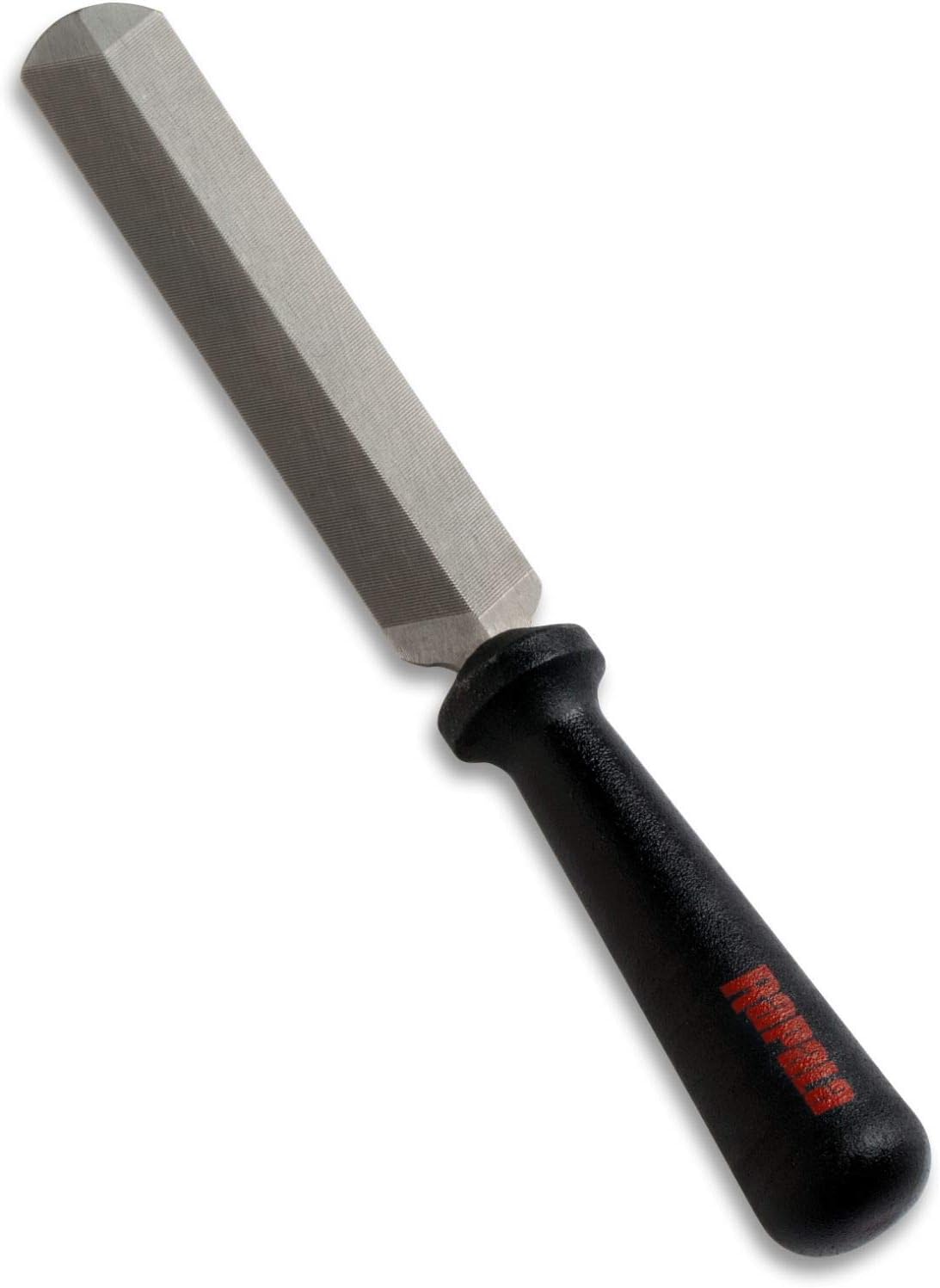
A steel or diamond-coated file, usually with a handle. Cuts fastest and gives the most control over the angle, which is what you want for putting three flat sides on a big worm hook or a circle hook. Too long to live in a shirt pocket, so it tends to become the bench tool.
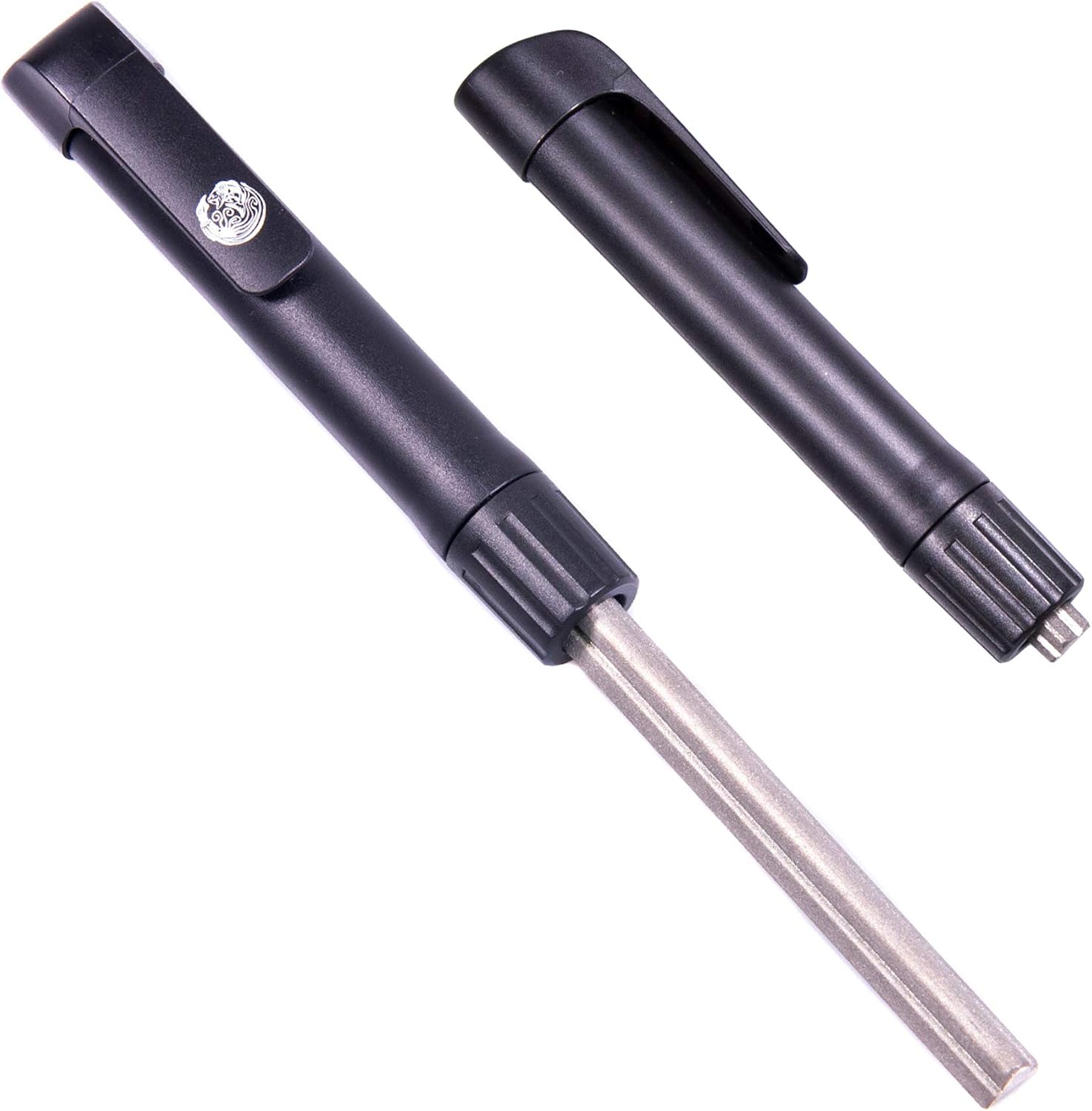
A diamond-coated block or rod, frequently with grooves cut into more than one face and a retractable sleeve to protect the grit. The type most anglers end up carrying, because it survives a tackle bag and works on trebles without dismantling the lure.
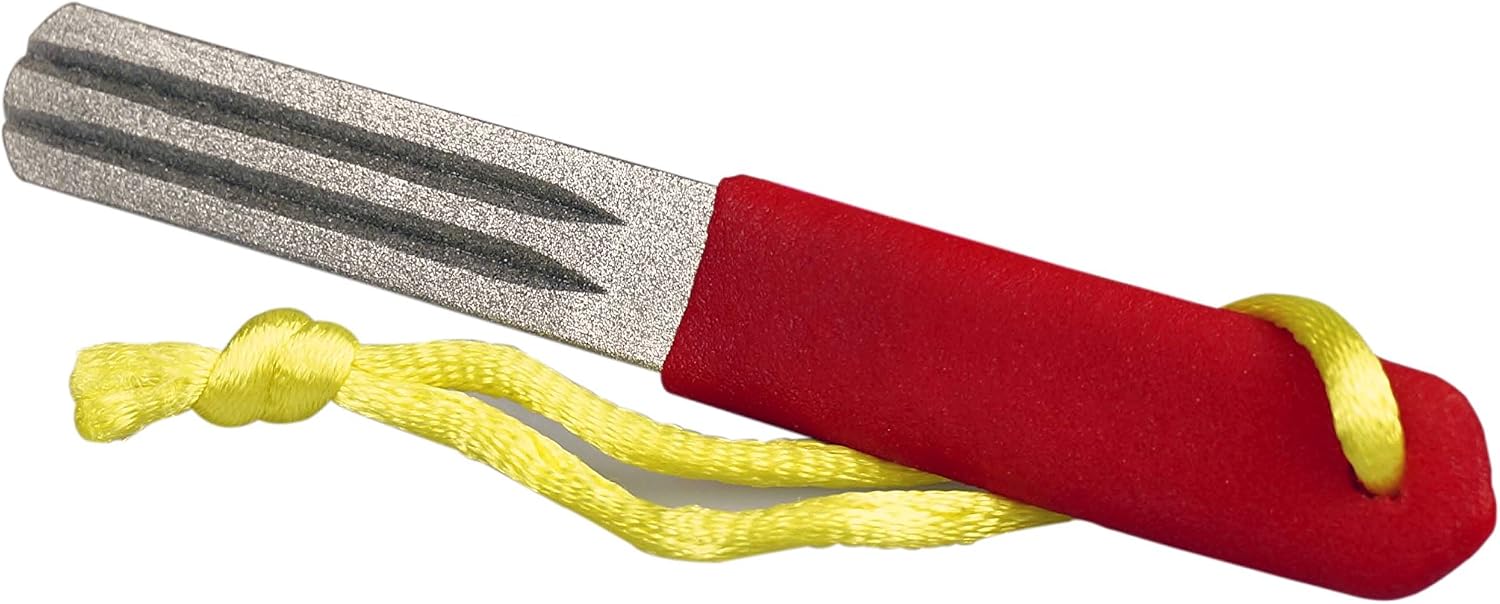
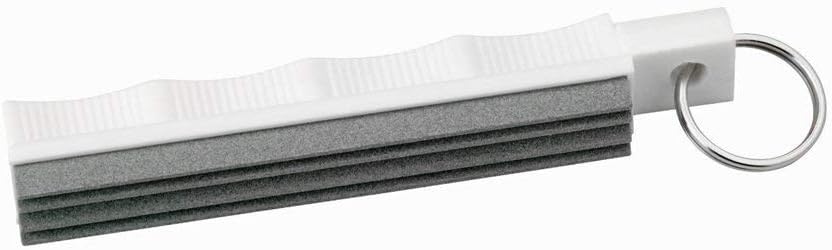
A small hone with multiple V-channels sized for different hook wires, usually with a clip or a ring hole. Gentler than a file, so it is a maintenance tool rather than a repair tool. Good for keeping a sharp hook sharp, slow at rescuing a badly damaged one.
Built primarily for a blade, with coarse and fine faces and a hook groove added at one end or corner. One tool covers the fillet knife and the hooks. The compromise is size and a groove that is often a single width rather than several.
Short on time? Start with these top-rated hook sharpeners picks.

Smith's DCS4 4-Inch Diamond Combination Sharpener is the #1 pick here, on 4.6-star Amazon buyer ratings (3,467 of them) and one clear job: hooks and the fillet knife.
Check Price
Kraken Bass Diamond Stone Hook Sharpener is the #2 pick here, on 4.6-star Amazon buyer ratings (226 of them) and one clear job: treble hooks still on the lure.
Check Price
SE Dual Grit Diamond Hook and Knife Sharpening Stone is the #3 pick here, on 4.4-star Amazon buyer ratings (432 of them) and one clear job: a spare for every tackle box.
Check PriceDetailed picks with verdicts, strengths, tradeoffs, and the situations where each one makes the most sense.

Quick verdict: Smith's DCS4 4-Inch Diamond Combination Sharpener is the #1 pick here, on 4.6-star Amazon buyer ratings (3,467 of them) and one clear job: hooks and the fillet knife.

Quick verdict: Kraken Bass Diamond Stone Hook Sharpener is the #2 pick here, on 4.6-star Amazon buyer ratings (226 of them) and one clear job: treble hooks still on the lure.

Quick verdict: SE Dual Grit Diamond Hook and Knife Sharpening Stone is the #3 pick here, on 4.4-star Amazon buyer ratings (432 of them) and one clear job: a spare for every tackle box.

Quick verdict: Dr. Slick Two-Sided Hook File is the #4 pick here, on 4.6-star Amazon buyer ratings (190 of them) and one clear job: trout flies and small hooks.

Quick verdict: Luhr-Jensen Original Hook File with Handle is the #5 pick here, on 4.6-star Amazon buyer ratings (131 of them) and one clear job: big single hooks at the bench.

Quick verdict: Rapala 4-Inch Hook File is the #6 pick here, on 4.5-star Amazon buyer ratings (66 of them) and one clear job: cutting three flat sides on a point.

Quick verdict: Lansky Multi-Groove Fish Hook Sharpener is the #7 pick here, on 4.4-star Amazon buyer ratings (383 of them) and one clear job: clipping to a vest or lanyard.
Coarse grit, roughly 200 to 400, removes metal fast and is what reshapes a point that has rolled over or snapped. Fine grit, 600 and up, polishes that new point until it bites. A tool with both lets you do the whole job; a single fine surface can only maintain a point that is already close.
V-shaped grooves cradle a hook so the point cannot skate sideways, which is what makes them the sane choice for small hooks and for treble points you cannot get a flat file against. Flat faces are better on big single hooks, where you want to cut three straight sides and end up with a triangular point.
The best sharpener is the one in your pocket at the moment the point goes dull. Retractable bodies and clip-on hones ride on a vest or a lanyard and get used between casts. A file with a full handle sharpens better and faster but tends to live at the bench, which means the hook stays dull all day.
Several of these carry a knife edge on the flat and a hook groove on the corner. If you clean fish, that is one item instead of two. If you only ever want hooks sharp, a dedicated hook file is smaller, cheaper and easier to aim at a size 12.
Treble points sit at angles a flat file cannot reach. Pick a grooved diamond stone with sharpening channels on more than one side so you can rotate the bait and take each point in turn.
Small chemically sharpened hooks need honing, not grinding. A fine two-sided file takes the burr off without thinning the wire to the point where it bends on a decent fish.
A combination diamond sharpener carries coarse and fine faces for the blade and a small groove in the corner for hooks. Bulkier than a hook file, and it replaces two things in the bag.
Practice on a hook you do not care about before you take a file to a favourite crankbait. The whole sequence takes under a minute once the motion is familiar.
Drag the point across a thumbnail. If it bites, leave it alone. Sharpening a hook that did not need it only removes metal and strips its coating for nothing.
Off the lure with split ring pliers if you can. If not, hold the bait so the two points you are not working on face away from your fingers. This is where people get hooked, not during the stroke itself.
Rolled, bent or visibly flattened means coarse. Merely tired means go straight to the fine side. Coarse grit on a hook that only needed honing thins the wire for no gain.
Set the point against the file at roughly 30 to 45 degrees and pull the hook so the file works from the barb toward the tip. Pushing the other way raises a burr instead of cutting one off.
Four or five strokes on the inside face, then each of the two outer faces. That is what produces a triangular point rather than a chisel, and a triangular point penetrates from any angle.
A few light passes on the fine surface, then back to the thumbnail. It should catch without pressure. If it skates, you have not reached the tip yet, which usually means the angle was too shallow.
The freshly cut tip has no coating left on it. Wipe the hook, let it dry, and if it is going back in the box for a while, expect to touch it up again before you fish it.
Once you know which kit type fits your situation, dig into each gear category for in-depth picks and buying advice:
Want to browse beyond the ranked picks? Filter and sort the full hook sharpeners listing below.


New chemically sharpened hooks from brands like Gamakatsu and Owner arrive genuinely sharp, so a fresh packet needs nothing. The point dulls in use, not in the box. Rock, gravel, dock pilings, shell beds and a missed hookset all roll a point over, and a hook fished hard for a day is usually not as sharp as it was that morning. Hooks that have been sitting in a damp tackle tray also lose their edge to light corrosion. The honest answer is that sharpening matters most for anglers who fish structure and reuse hooks and lures for years, and matters least if you tie on fresh hooks every trip.
Reader-supported and free of paid placements. Every pick is ranked on published specs and Amazon buyer ratings, not on who pays us.
Each pick is compared on published specs, materials, design, and category fit across the major brands.
Rankings factor in how well each product matches common freshwater fishing needs, not just popularity.
Star ratings and review volume from Amazon buyers are factored in to reflect real-world satisfaction.
A pick earns its spot by delivering useful performance for the money, whether budget or premium.

A dull point is the cheapest thing to fix in the whole tackle bag. Start with the hooks themselves and work out which sizes you are actually blunting.
See the hook guide