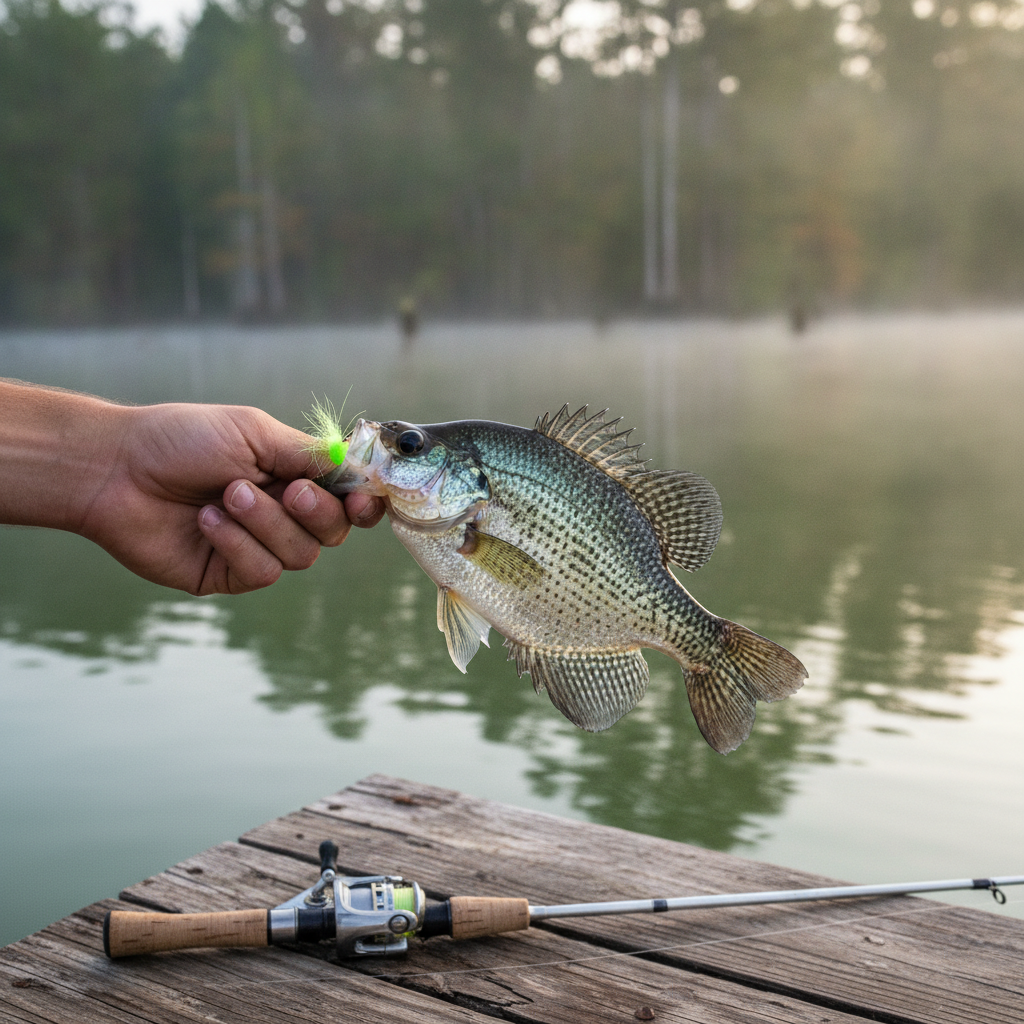
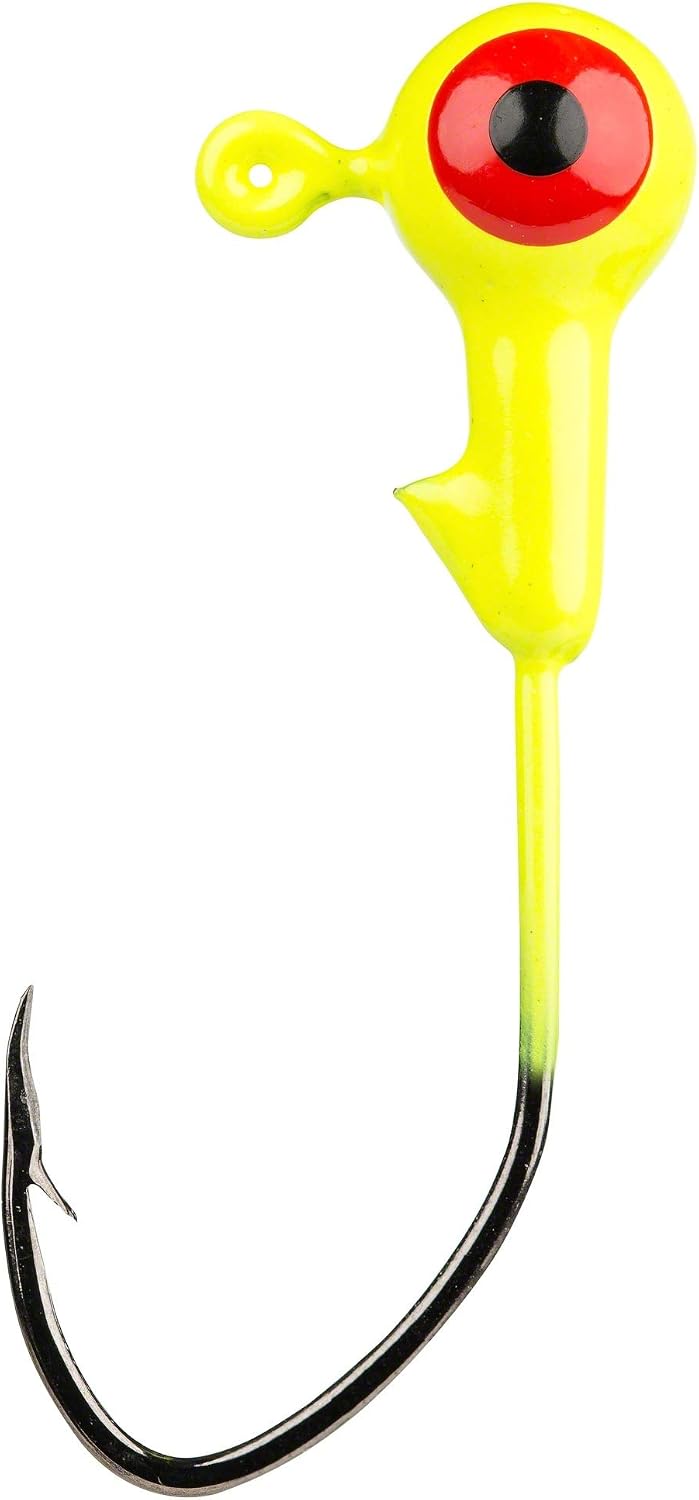
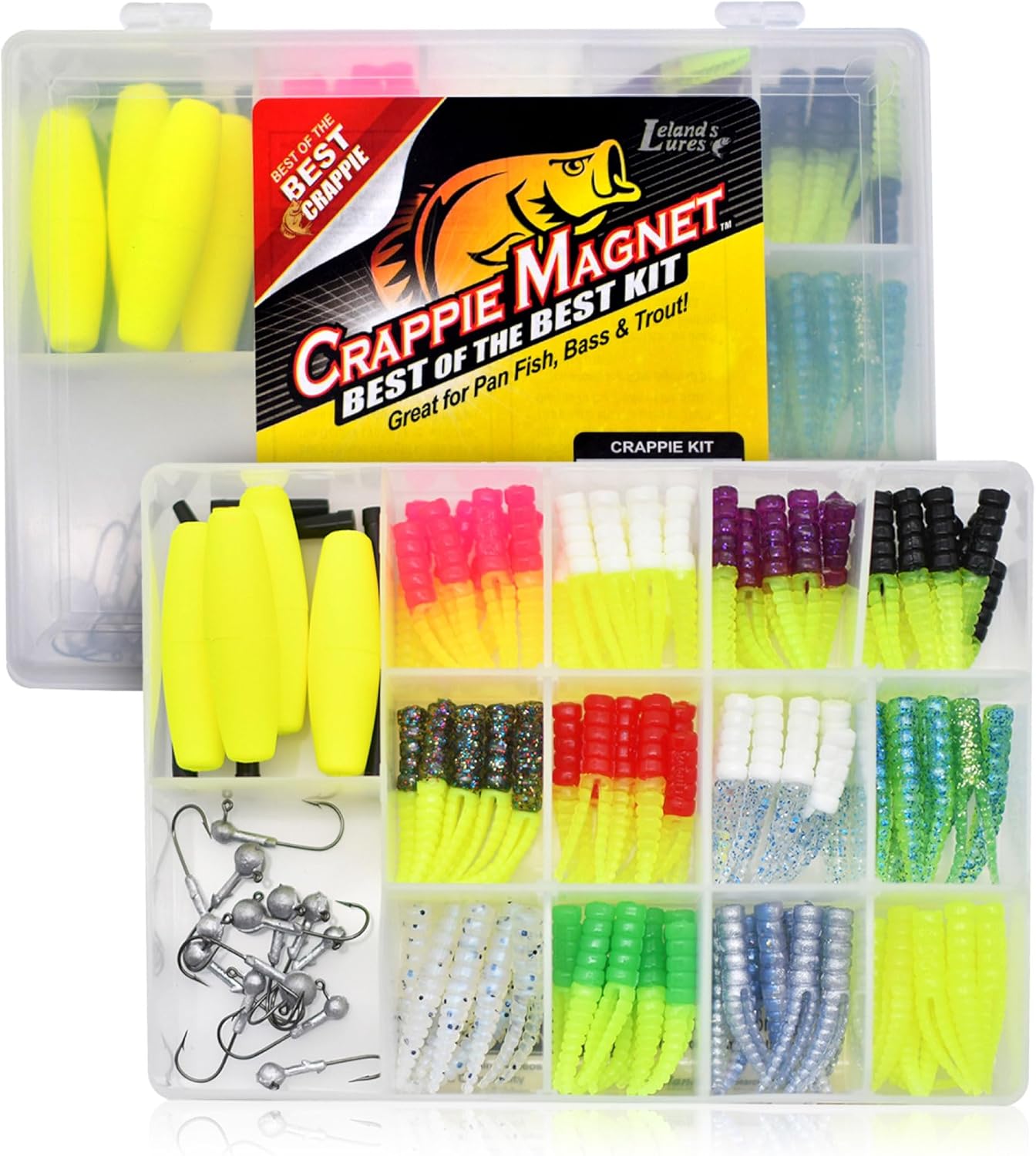
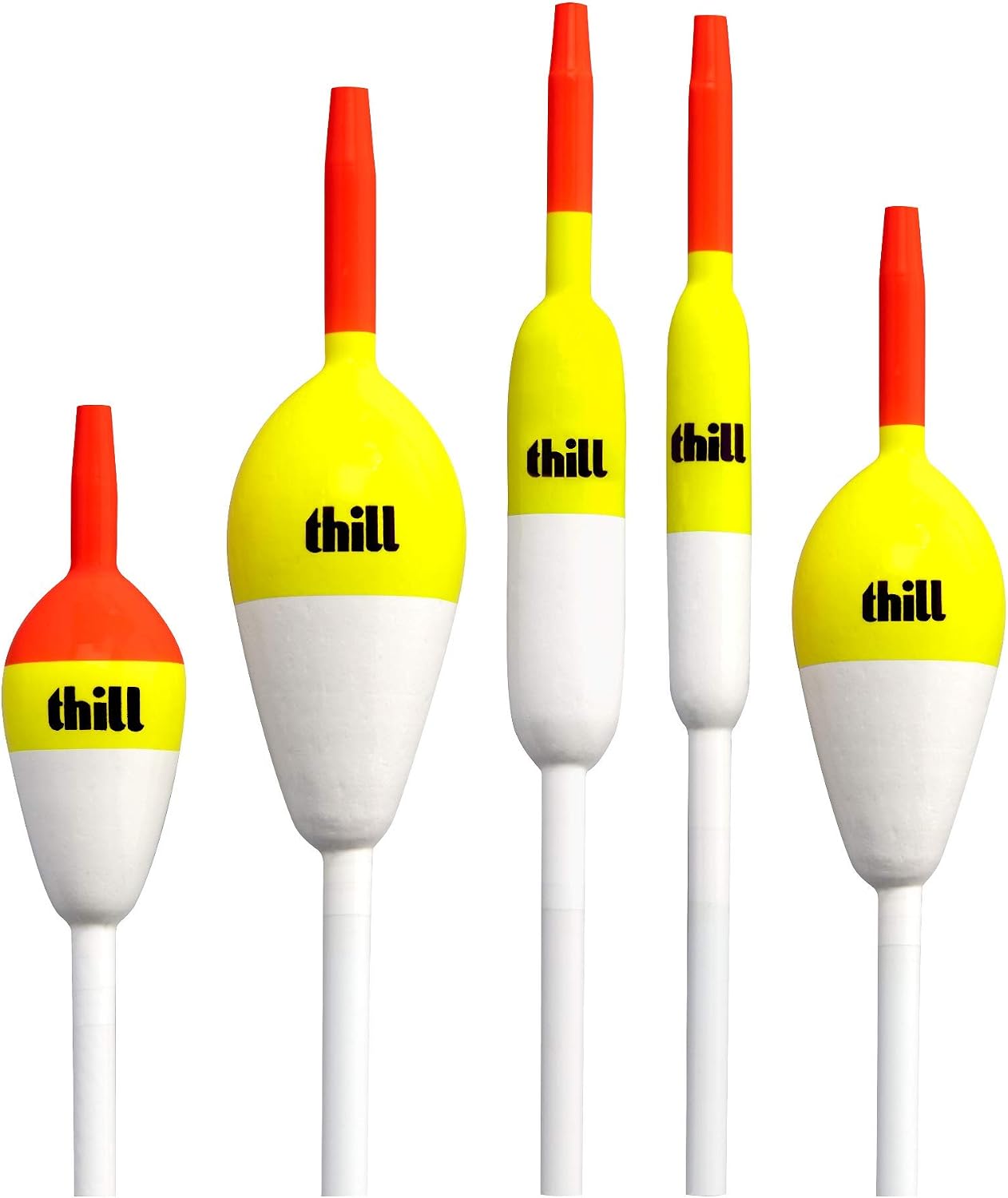
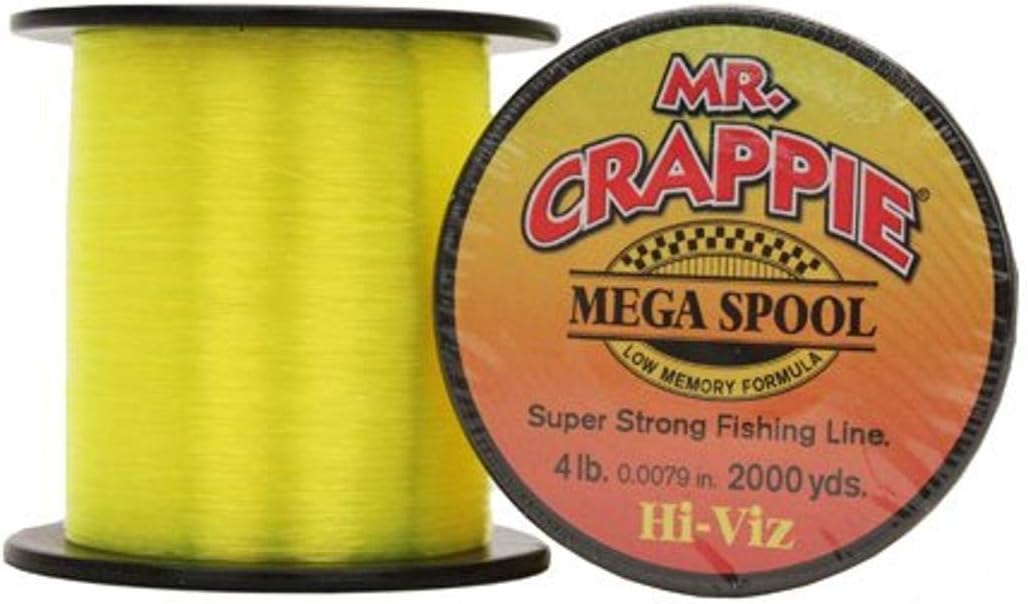
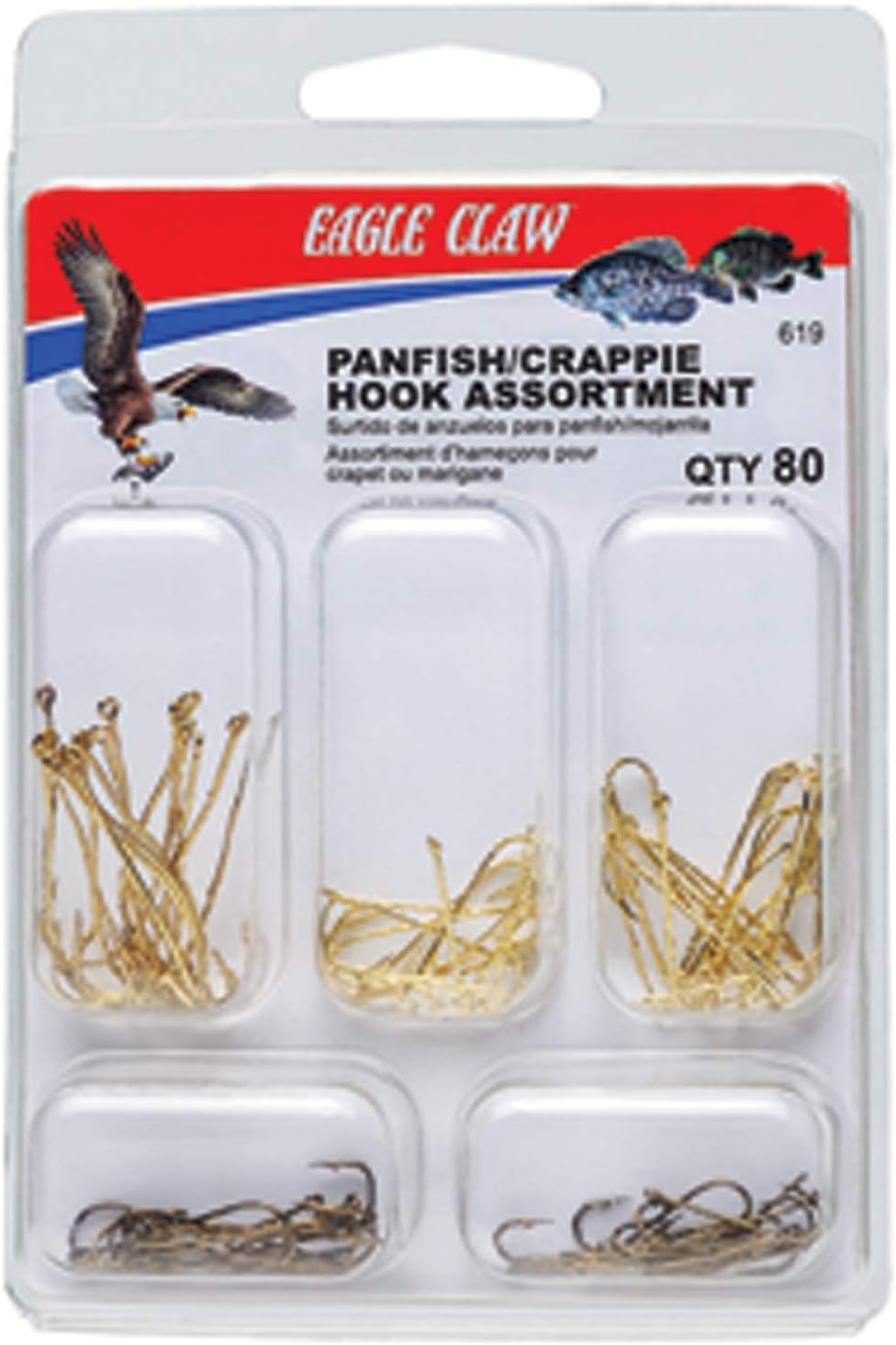
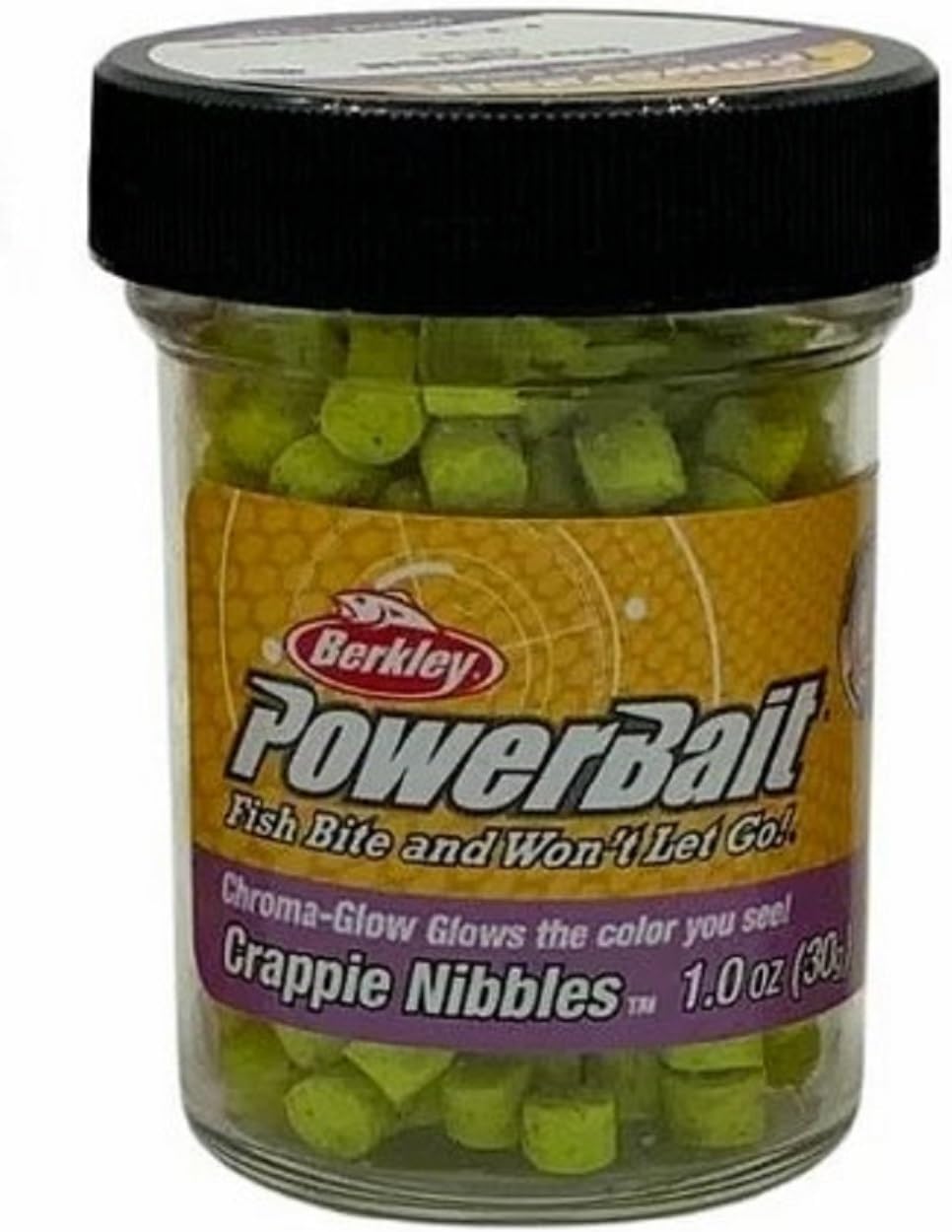
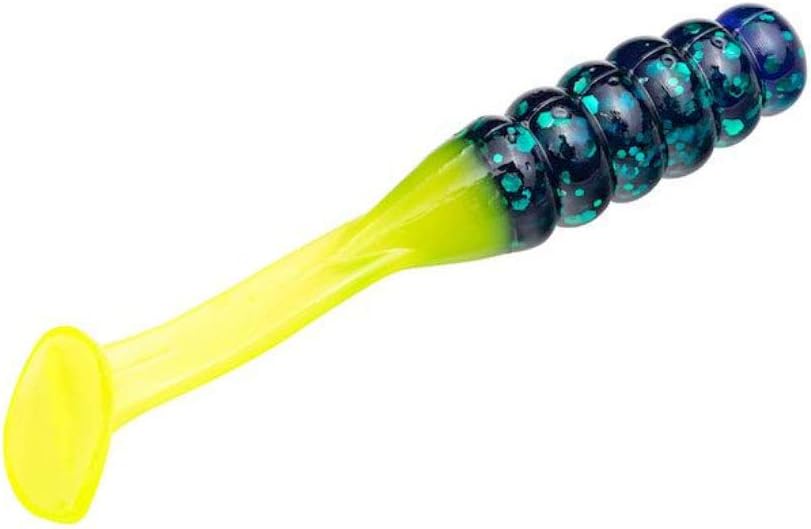
Crappie are the easiest good fish in freshwater to catch and the easiest to overthink. They sit tight to brush, dock pilings and standing timber, they want something small moving slowly, and almost all of them get caught on a tiny jig head with a two inch piece of soft plastic threaded on it. Jason Sealock puts the standard at a 1/16 ounce head at Wired2Fish, with 1/32 and 1/8 ounce covering nearly everything else. That is the entire category. What separates a good crappie evening from a blank one is usually depth control and whether you can tell a bite happened, not which brand of plastic is in the tray.
So this page ranks the jig, the things that hold it at a chosen depth, and the line that shows you the take. No rod and no reel is ranked here, on purpose. Sealock's crappie setup is a six to seven foot light or medium light spinning rod on a 1000 or 2000 size reel, which is the same rod another guide on this site already compares in detail. Publishing a third version of it under a crappie headline would split one recommendation across two pages for no reason. The rod you already own is probably close enough. The four dollar jig head tied to the end of it is where the trip is decided.
Picks are ordered by how much each one changes a bank or dock session, then by how they hold up in Amazon's buyer ratings. Tom has not fished these products. The recommendations come from the published crappie guidance cited on this page plus each listing's own specs, and the star rating and review count printed beside every product were read off its Amazon listing on 2026-08-15. Prices move around constantly, so treat them as a snapshot rather than a promise.