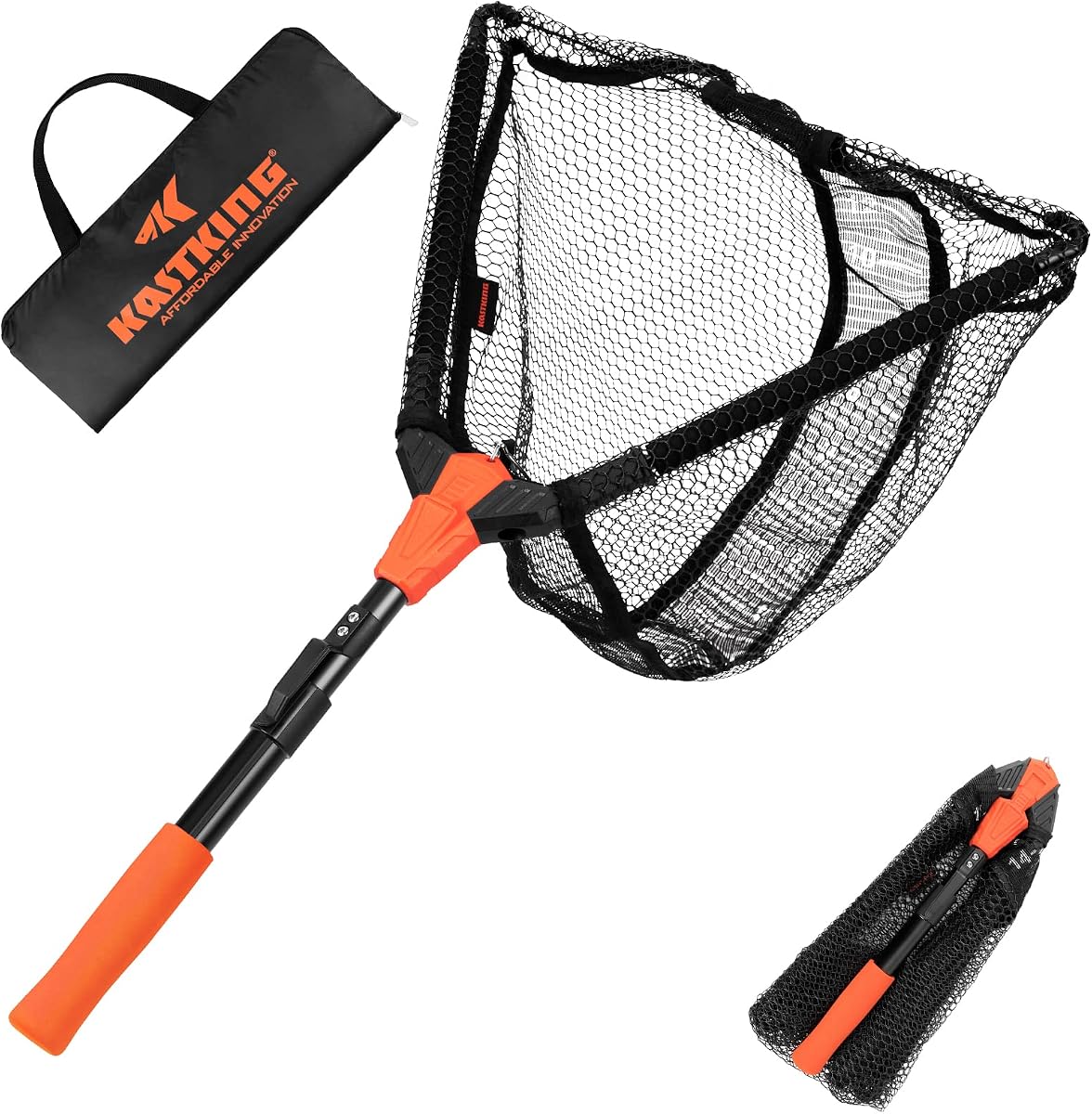
KastKing Pontus Foldable Fishing Net with Length Scale
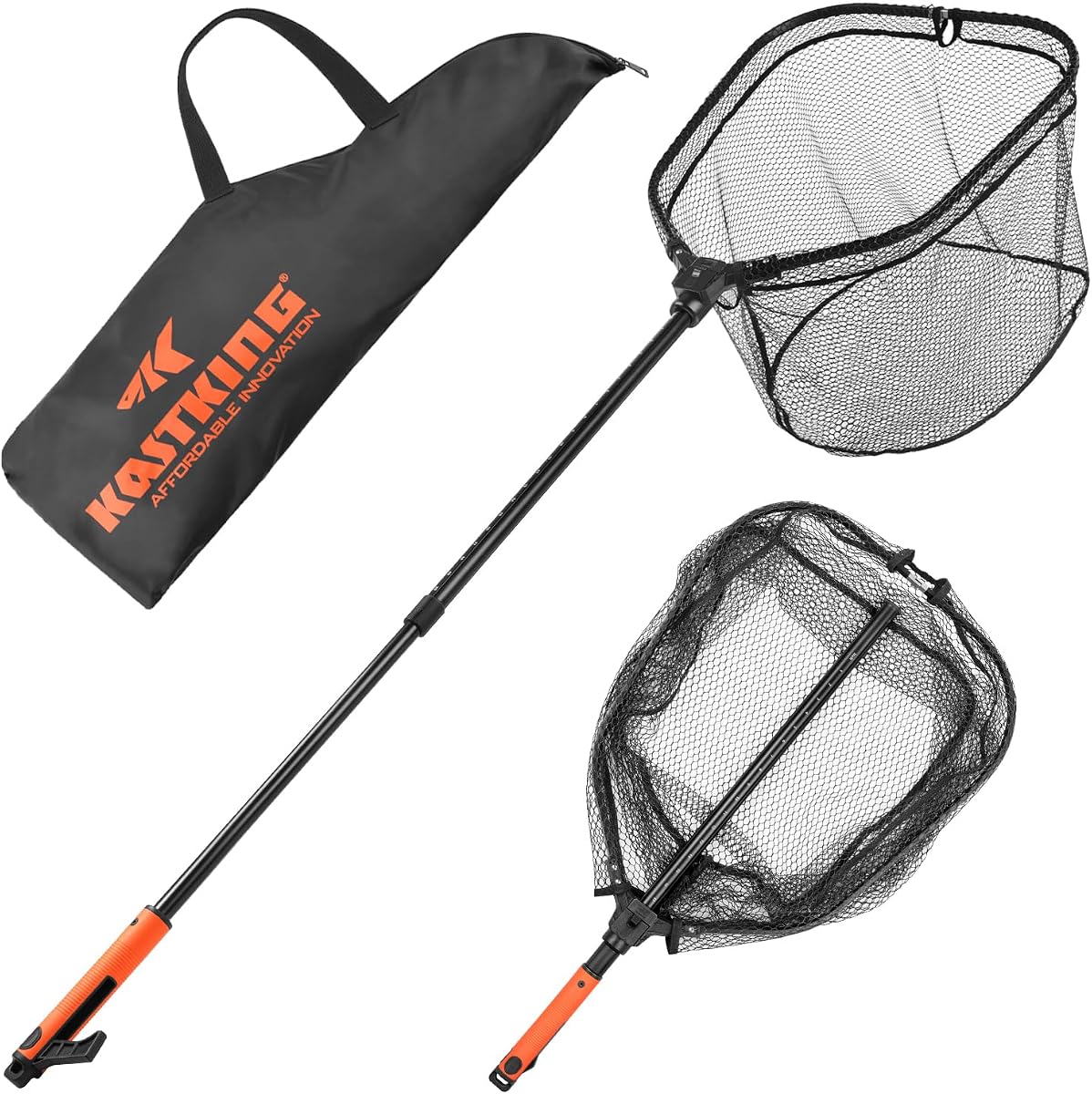
ASIN B0BNHWBPP8KastKing Pontus Foldable Fishing Net with Length Scale is the #1 pick here, on 4.6-star Amazon buyer ratings (1,355 of them) and one clear job: all-around freshwater.
Check Price
Rubber-mesh and folding landing nets that get fish in hand fast and let you release them healthy. Ranked for freshwater anglers, from a telescoping net to a premium conservation hoop.
A landing net is the cheap piece of gear that saves you the fish you actually want to keep. The dangerous moment in any fight is the last few feet, when a thrashing fish is right at your feet and the hook is barely holding. A net turns that gamble into a sure thing, and the right one also lets you handle and release fish without wrecking them. Start by matching the net to where and how you fish.
Two things drive the choice: net style and mesh. Style is about reach and packing. A foldable net collapses flat for a kayak, pack, or boat deck and pops open in a second, which suits most freshwater anglers. A telescoping handle extends to reach a fish from a high bank, a dock, or the side of a boat. A fixed-hoop net skips the moving parts entirely and is the toughest, roomiest option for a boat where storage is not a problem. Mesh is the other half. Soft rubber or rubber-coated mesh is the standard now: it leaves a fish's slime coat intact, and treble hooks pull free instead of weaving into the netting. That matters most if you release what you catch.
After that, size the hoop and handle to your fish. Panfish and stocker trout need almost nothing; bass and walleye want a hoop around 17 to 23 inches and a handle long enough to reach without leaning out over the water. If you are looking for the best catch and release fishing net, rubber mesh is non-negotiable: it leaves a fish's protective slime coat intact and sheds treble hooks cleanly. The picks below run from a telescoping net for bank anglers to a premium conservation hoop for the boat, and every one earns its place on real buyer ratings, not hype.

A net is simple, but a few features separate the ones that earn a spot in your boat from the ones that tangle, rust, and sit in the garage. The first four matter most; the rest just make a good net better.
Soft rubber mesh is easy on a fish's slime coat and lets treble hooks pull free instead of burying in the bag. It is the single most important feature if you release what you catch.
Too small and a good fish won't fit; too big and the net is clumsy. A 17-to-23-inch hoop covers most freshwater work from panfish up to solid bass and walleye.
A shallow net lets a thrashing fish flip back out. A deep bag cradles the fish so it stays put while you free the hook and grab a photo.
The handle has to reach the fish without you leaning out over the water. Telescoping handles add reach from a bank or boat; fixed handles are simpler and stronger.
A net that folds flat or collapses stows in a kayak tankwell, a pack, or under a boat seat instead of clattering around loose. Worth it if storage is tight.
Aluminum or coated frames shrug off the wet life a net leads. Cheap painted steel chips and rusts at the joints, which is usually where a net finally fails.
A net that floats is cheap insurance in a kayak or boat. Drop a sinking net over the side in deep water and it is simply gone.
A lanyard or magnetic clip keeps the net within reach and off the floor, so it is in your hand the instant a fish comes up instead of buried under gear.
Net style decides how it packs, how far it reaches, and how tough it is. Match the style to where you fish most. The right style matters more than the brand stamped on the handle.
Collapses flat to stow in a kayak, pack, or boat and snaps open in a second. With rubber mesh it is the do-everything pick for freshwater and the safest first net.
An extendable pole reaches a fish you cannot otherwise touch from a steep shoreline, a dock, or a boat side, then collapses short for carrying. Cheap reach for shore anglers.
One piece, no moving parts to break, with a roomy hoop and deep bag. The toughest, most forgiving option when you have deck space to store it open.
A buoyant frame keeps the net on the surface if you drop it over the side. Worth it on deep water from a kayak or small boat where a sinking net is gone for good.
Short on time? Start with these top-rated fishing landing nets picks.

KastKing Pontus Foldable Fishing Net with Length Scale is the #1 pick here, on 4.6-star Amazon buyer ratings (1,355 of them) and one clear job: all-around freshwater.
Check Price
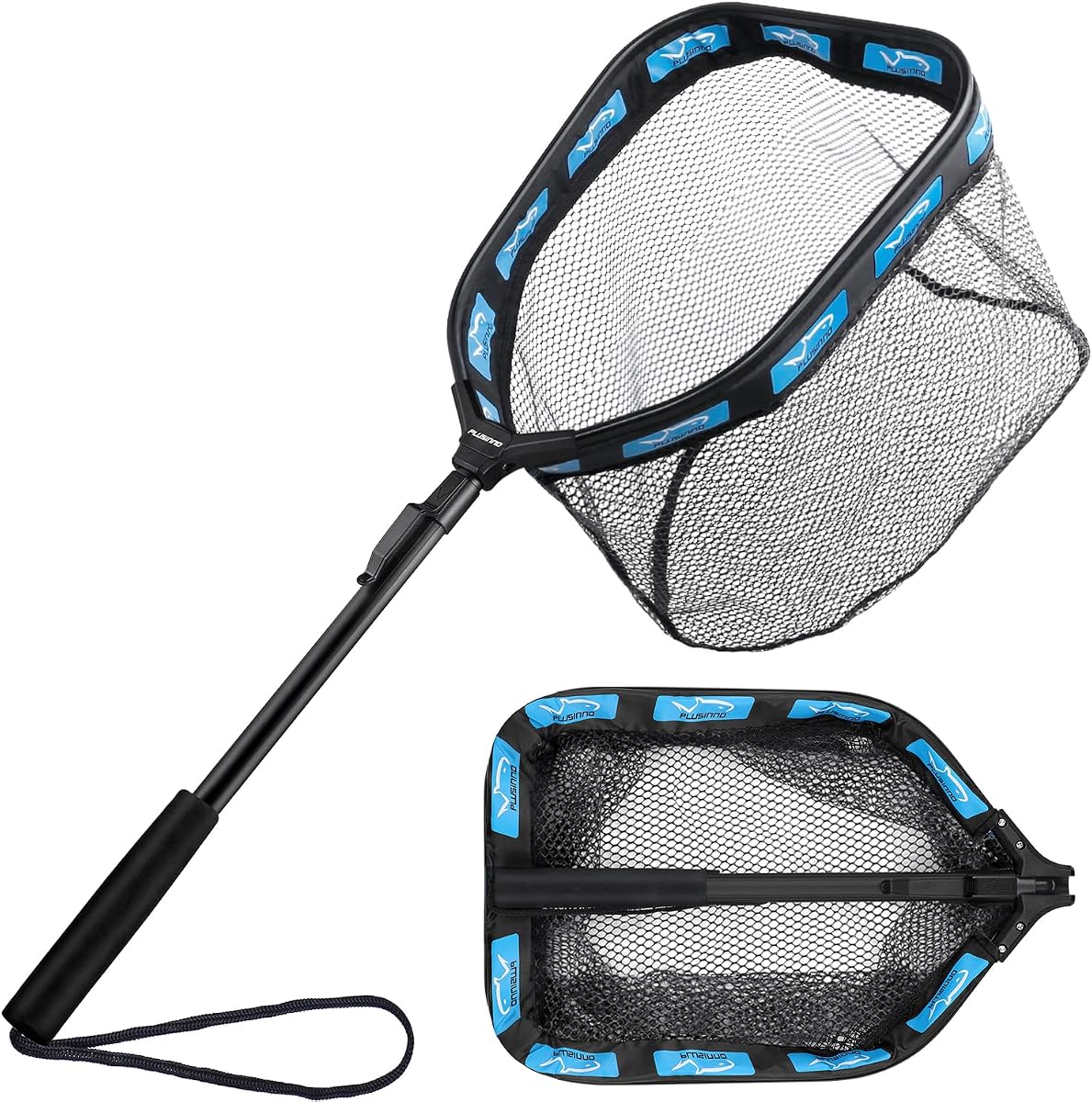
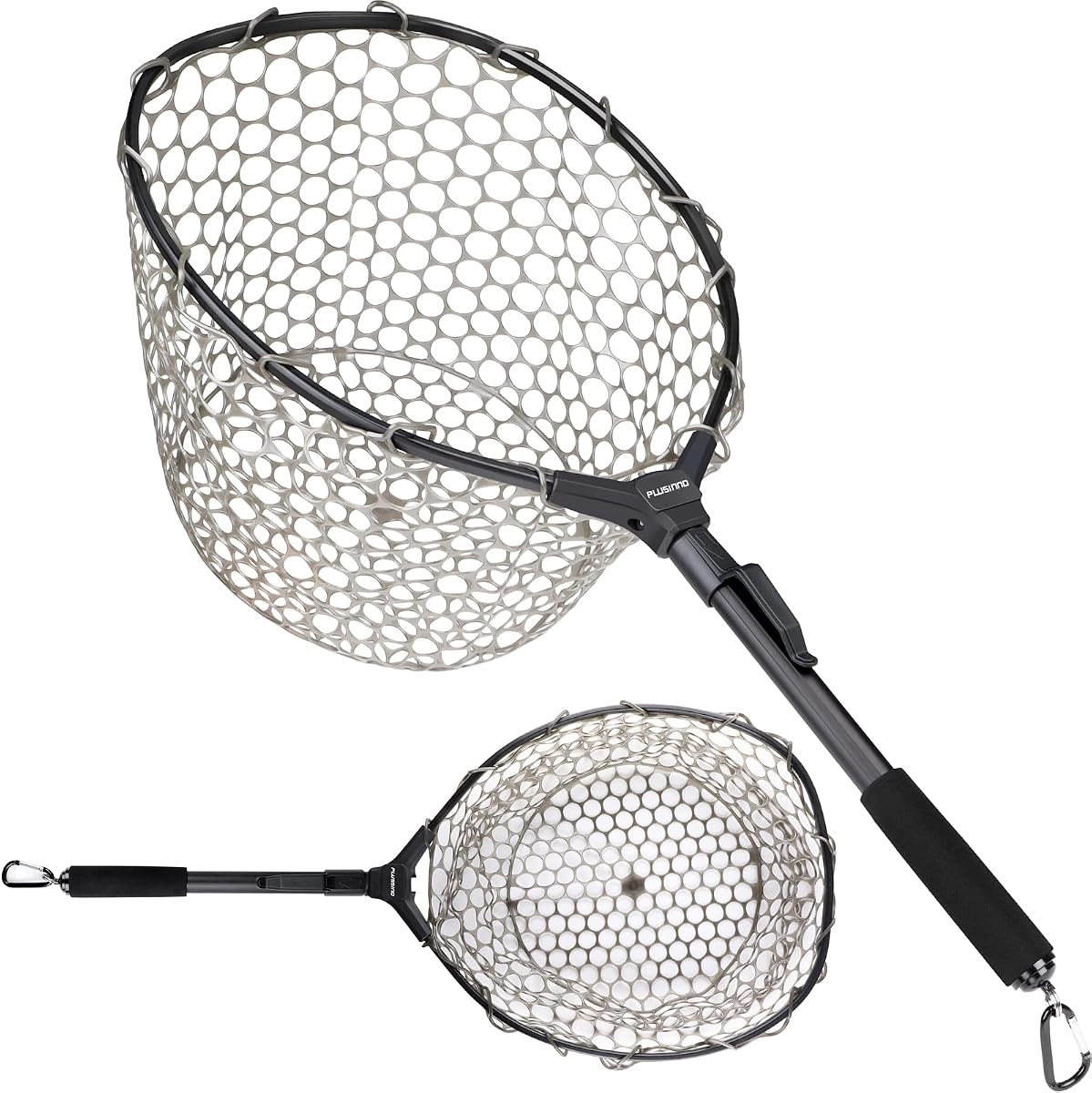
PLUSINNO Floating Rubber-Coated Foldable Landing Net is the #2 pick here, on 4.5-star Amazon buyer ratings (2,654 of them) and one clear job: kayak catch-and-release.
Check Price
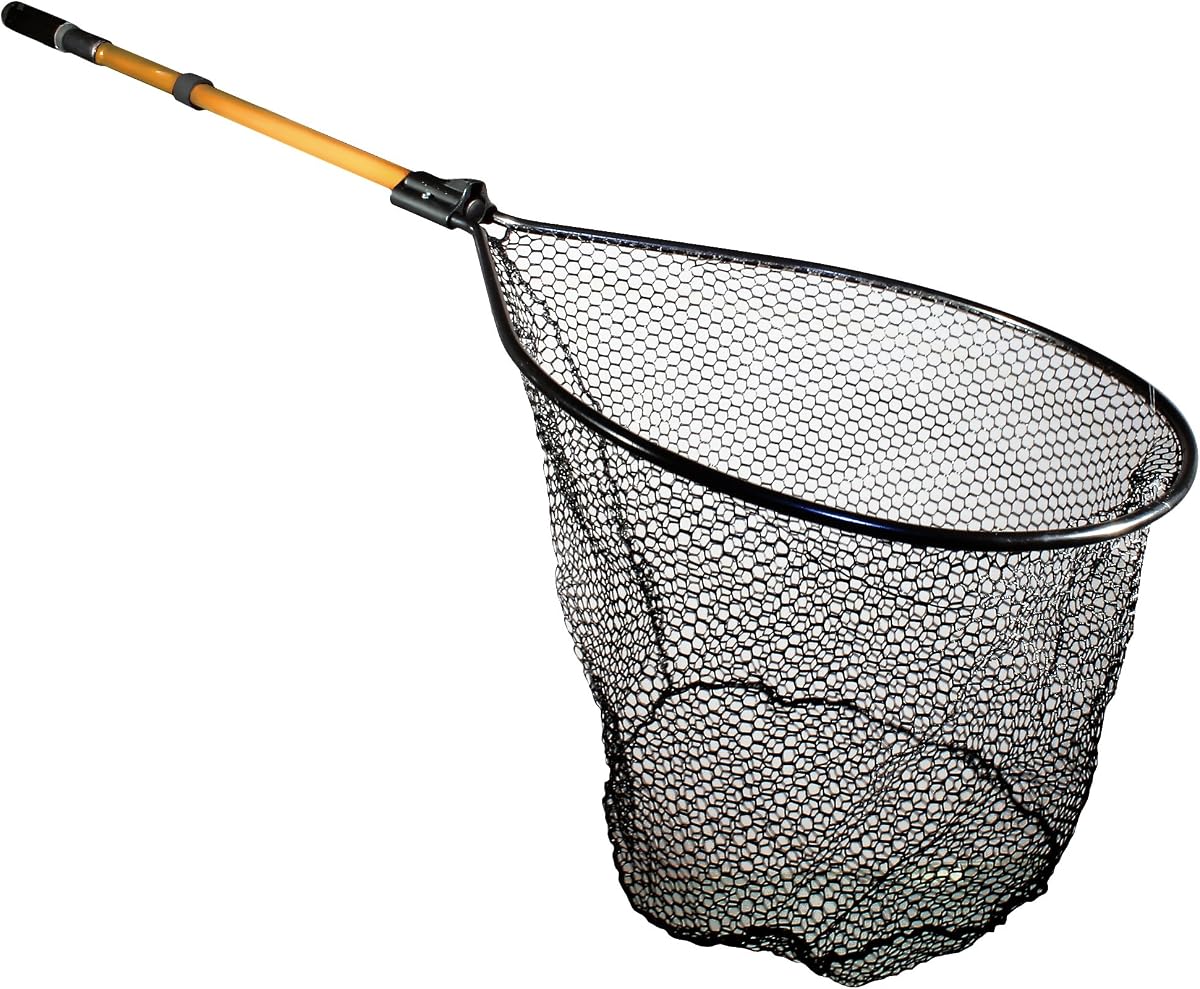
Frabill Conservation Series Landing Net (20 x 23-Inch) is the #3 pick here, on 4.5-star Amazon buyer ratings (668 of them) and one clear job: boat & big fish.
Check PriceDetailed picks with verdicts, strengths, tradeoffs, and the situations where each one makes the most sense.

Quick verdict: KastKing Pontus Foldable Fishing Net with Length Scale is the #1 pick here, on 4.6-star Amazon buyer ratings (1,355 of them) and one clear job: all-around freshwater.

Quick verdict: PLUSINNO Floating Rubber-Coated Foldable Landing Net is the #2 pick here, on 4.5-star Amazon buyer ratings (2,654 of them) and one clear job: kayak catch-and-release.

Quick verdict: Frabill Conservation Series Landing Net (20 x 23-Inch) is the #3 pick here, on 4.5-star Amazon buyer ratings (668 of them) and one clear job: boat & big fish.

Quick verdict: PLUSINNO Folding Fly Fishing Net, Rubber Mesh is the #4 pick here, on 4.4-star Amazon buyer ratings (2,050 of them) and one clear job: trout & fly streams.

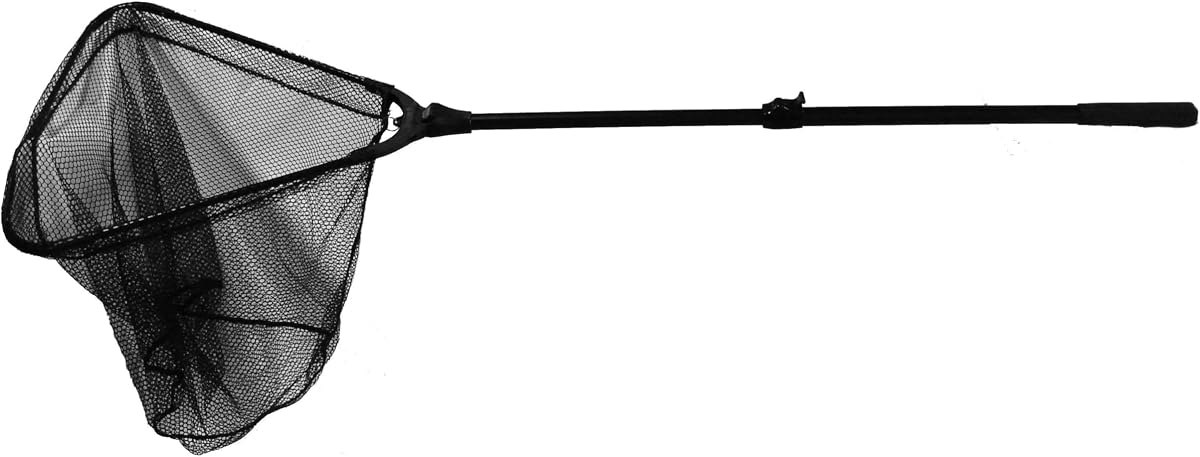
Quick verdict: Frabill Folding Landing Net (22 x 20-Inch) is the #5 pick here, on 4.3-star Amazon buyer ratings (469 of them) and one clear job: all-around freshwater.

Quick verdict: KastKing Brutus Folding Landing Net with Boat Hook is the #6 pick here, on 4.3-star Amazon buyer ratings (312 of them) and one clear job: boat netting & docking.

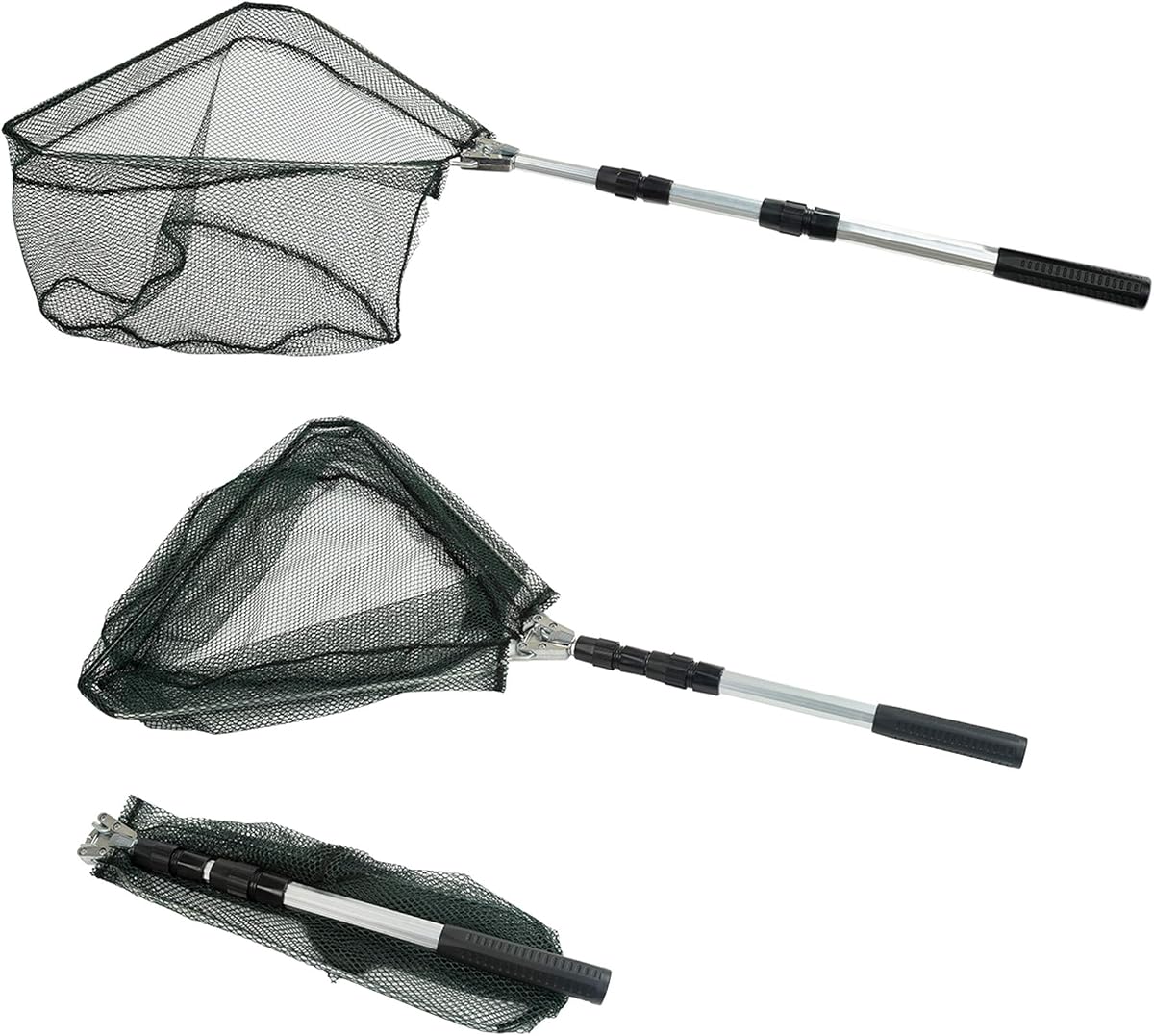
Quick verdict: RESTCLOUD Telescoping Fishing Landing Net (40-63 in) is the #7 pick here, on 4-star Amazon buyer ratings (11,645 of them) and one clear job: bank & shore reach.
Foldable nets pack flat for kayaks and packs. A telescoping handle reaches fish from a bank or boat side. A fixed hoop is the toughest, roomiest pick when storage is not a concern.
Soft rubber or rubber-coated mesh does not strip a fish's protective slime coat, resists tangling treble hooks, and rinses clean. It is the safest choice if you release fish.
Match the hoop to your target. Panfish and trout need little; bass and walleye want roughly a 17-to-23-inch hoop with enough depth to hold a fish that rolls.
A handle long enough to reach the fish without leaning over the water keeps you safe and the fish in control. Telescoping handles add reach for high banks and boats.
A net that folds flat and uses rubber mesh stows in a tankwell or under a seat and handles a quick, safe release without tangling your lure's trebles.
An extendable pole reaches a fish you can't otherwise touch from a steep shoreline or a dock, and collapses short for the walk back to the truck.
A one-piece hoop with a deep bag and no moving parts is the most durable, roomiest option when you have the deck space to store it open.
More fish are lost at the net than anglers like to admit, almost always from netting too early or chasing the fish. Here is how to land one cleanly and release it healthy, even if you have never run a net before.
A green, thrashing fish will dodge the net and throw the hook. Fight it until it rolls on its side near the surface before you reach for the net.
Guide the fish toward the net headfirst and let it swim in. A fish can't swim backward, so a headfirst scoop ends the fight; netting tail-first just lets it bolt.
Don't chase the fish with the net. Sink the hoop, lead the fish over it, and lift straight up so the fish drops into the bag instead of bouncing off the rim.
Dry hands strip slime and damage the fish. Wet your hands first, and leave the fish in the wet net while you free the hook to keep it calm and protected.
Use the net to hold the fish boatside in the water while you unhook it. Minimizing air time is the biggest thing you can do for a fish you plan to release.
Rinse off slime and grit and let the net dry before it goes away. A clean, dry net lasts seasons; a wet, fish-slimed one grows mildew and rots the mesh.
Once you know which kit type fits your situation, dig into each gear category for in-depth picks and buying advice:
Want to browse beyond the ranked picks? Filter and sort the full fishing landing nets listing below.


For panfish and small trout you can hand-land most fish, but a net makes a real difference on bass, walleye, catfish, and anything you fight to the boat or bank. It is the cheapest way to stop losing fish at the last second and to release them unharmed.
Reader-supported and free of paid placements. Every pick is ranked on published specs and Amazon buyer ratings, not on who pays us.
Each pick is compared on published specs, materials, design, and category fit across the major brands.
Rankings factor in how well each product matches common freshwater fishing needs, not just popularity.
Star ratings and review volume from Amazon buyers are factored in to reflect real-world satisfaction.
A pick earns its spot by delivering useful performance for the money, whether budget or premium.

Once the fish is in the net you need something to get the hook out. See which pliers hold up and which rust shut.
See Fishing Pliers